DIY or hire
Can I Do Water Restoration Myself?
Often, yes. A small leak of clean water, found within a day and kept to hard floors or one patch of carpet, is a fair DIY job with a wet vacuum, fans and a dehumidifier. Call a pro when the water was sewage or floodwater, when it soaked into walls or a ceiling you cannot measure, when things stayed wet past 48 hours, when mold covers more than about 10 square feet, or when you would have to cut into a home built before 1978. The job is not done when it feels dry. It is done when a meter says so.
Published October 19, 2026 by the Remediational editors. General information, not professional, legal or insurance advice.
Sections
7 sections
Where the Line Between DIY and Pro Really Sits
Our directory lists 22,459 companies that do water damage work, counted from our own listings file in September 2026. You would think we would tell you to call one every time. We will not. A lot of water damage is a mop job with good fans, and paying for a crew to dry a kitchen floor that was wet for an hour is money you did not need to spend.
Much of what you find on this question is written by restoration companies, and the answer always lands on their phone number. Some of it is sound. But almost none of it tells you where the line really is, what the gear costs, or how to prove you are finished.
So this post does three things. It gives you five tests that move a job from DIY to pro. It prices the DIY kit next to a pro crew. And it shows you how to check that a room is dry, because that is the step where DIY jobs fail months later.
Five Tests That Turn a DIY Job Into a Pro Job
Run your leak through these. One clear yes is enough to call someone, or at least to pay for an inspection before you go further.
| Test | Why it matters | What the source says |
|---|---|---|
| 1. Was the water dirty? Sewage, a toilet with waste, or floodwater from outside. | Dirty water carries germs into everything porous it touches. Fans can spread it. | EPA says to call a professional with contaminated water experience. Its cleanup table says not to run fans until the water is confirmed clean. |
| 2. Has it been wet more than 48 hours? | Mold can start in that window, and a cleanup becomes a mold job. | EPA says to dry water damaged areas and items within 24 to 48 hours to prevent mold. |
| 3. Is there mold over about 10 square feet? That is roughly a 3 foot by 3 foot patch. | Bigger growth needs containment so spores do not spread to clean rooms. | EPA says you can often handle less than about 10 square feet yourself, and points larger jobs to its professional remediation guide. |
| 4. Will you cut into a home built before 1978? | Old paint can hold lead, and old flooring or wall materials can hold asbestos. Cutting and sanding put it in the air. | EPA says renovation in pre 1978 homes can easily create dangerous lead dust. It says asbestos removal must be done only by a trained and accredited professional. |
| 5. Is the water inside walls, ceilings or under the floor? | You cannot dry what you cannot reach or measure. This is where hidden mold starts. | EPA says wallboard can dry in place only with no swelling and intact seams. Otherwise it comes out. |
Two more stop signs come before any of the five. Never touch wet electrical gear or stand in water near outlets, and turn off the power only if you can do it safely. Ready.gov says the same. And keep anyone with asthma, lung disease or a weak immune system out of the wet rooms. Ready.gov says those people should not go into buildings with water leaks or mold.
Not sure which kind of water you have? Our water category checker walks you through it in under a minute.
What a Real DIY Job Looks Like
If your leak passed all five tests, the job goes in this order. It is not hard. It is just steady work for a few days.
- Stop the water. Close the fixture valve or the main. Fix or cap the source before you dry anything, or you are drying the same room twice.
- Take photos and video first. Every wet room, the source and the water line on walls. You will want them if you file a claim.
- Get the water out. A wet vacuum does more than towels ever will. Pull up area rugs and get them out of the room.
- Pull the pad. Carpet pad soaks up water like a sponge and is cheap to replace. Our guide on drying wet carpet and pad shows how to float the carpet and when to give up on it.
- Move air across wet surfaces. Fans pointed low along the floor and the base of the walls. Pull baseboards on wet walls so air reaches the bottom of the drywall.
- Run a dehumidifier with the room closed. Fans move water into the air. The dehumidifier takes it out. Without one you just move the damp around the house. Our dehumidifier size helper gives you a starting size.
- Measure every day. Same spots, same time, written down. More on that below.
The EPA cleanup table backs this up for clean water. For carpet it says to remove the water with a water extraction vacuum, cut the humidity with a dehumidifier and speed drying with fans. For hard floors it says to wipe them with mild detergent and water, then make sure the floor under them is dry.
For the full first day checklist, see what to do in the first 24 hours after water damage.
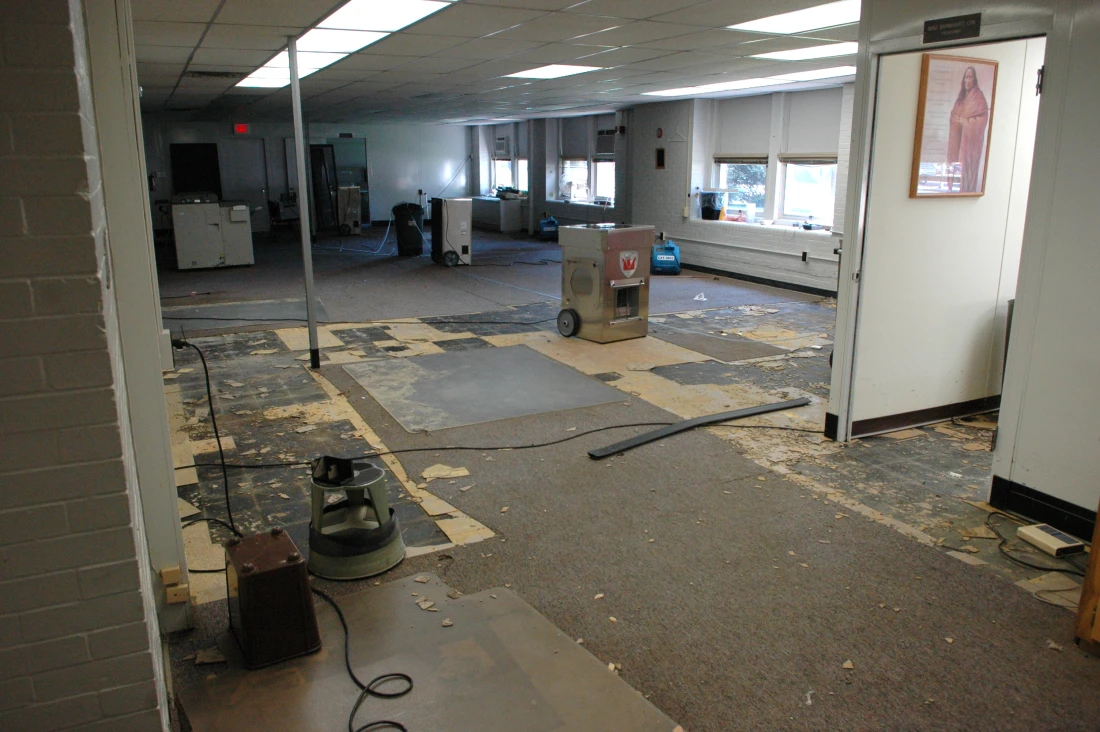
The Gear and What It Costs Next to a Pro
This is where DIY wins, when the job is small. The figures below are the typical United States ranges from our own water damage restoration cost guide. They are estimates, not quotes, and your local prices will vary.
| What you pay for | Typical range |
|---|---|
| DIY kit, bought or rented. A wet vacuum, two or three fans and a home dehumidifier. | $50 to $500 |
| A pin moisture meter | $30 to $80 |
| Pro drying equipment alone for a bedroom, three or four air movers and one dehumidifier for three to five days | $500 to $1,200 |
| Pro job, a small clean water spill in one room caught within hours | $1,000 to $3,000 |
| Pro job, one or two rooms with wet drywall and carpet | $2,500 to $7,500 |
One Wet Room, DIY Next to a Pro
Top of each typical range from our cost guide, in dollars. Rebuild not included.
- Moisture meter$80
- DIY kit$500
- Pro equipment only, one bedroom$1,200
- Pro job, one room, clean water$3,000
- Pro job, wet drywall and carpet$7,500
Read that last line in the chart twice. The gap between $500 and $3,000 is real savings on the right job. On the wrong job it is a loan you pay back later, with mold remediation and new drywall on top.
One trap with gas powered gear. If the power is out and you reach for a generator or a gas pump, Ready.gov says to use a generator or other gas powered machinery only outdoors and away from windows. Never in the basement you are drying.
Dry Means Measured, Not Touched
This is the step the top ranking pages skip, and it is the one that sinks DIY jobs. Drywall, wood and subfloor feel dry on the surface long before they are dry inside. Close the wall too soon and you seal water in with the mold food.
We suggest a simple method for a homeowner with a $30 to $80 pin meter.
- Take a reference reading. Find the same material in a room that never got wet. Same drywall, same kind of wood floor. Write down that number. That is your target.
- Mark your test spots. Put painter’s tape at three or four spots on each wet wall, low near the floor and higher up, and on the floor itself.
- Read them every day. Same spots, same time, in a notebook or a phone note.
- Watch the trend. The numbers should drop each day toward your reference. You are done when the wet spots read about the same as the dry ones.
- Call for help if they stall. If readings stop falling, or one spot stays high while others dry, water is getting in from somewhere or it is trapped where your fans cannot reach.
Meters read differently on different materials, so always compare drywall to drywall and wood to wood. Never compare a wall reading to a floor reading.
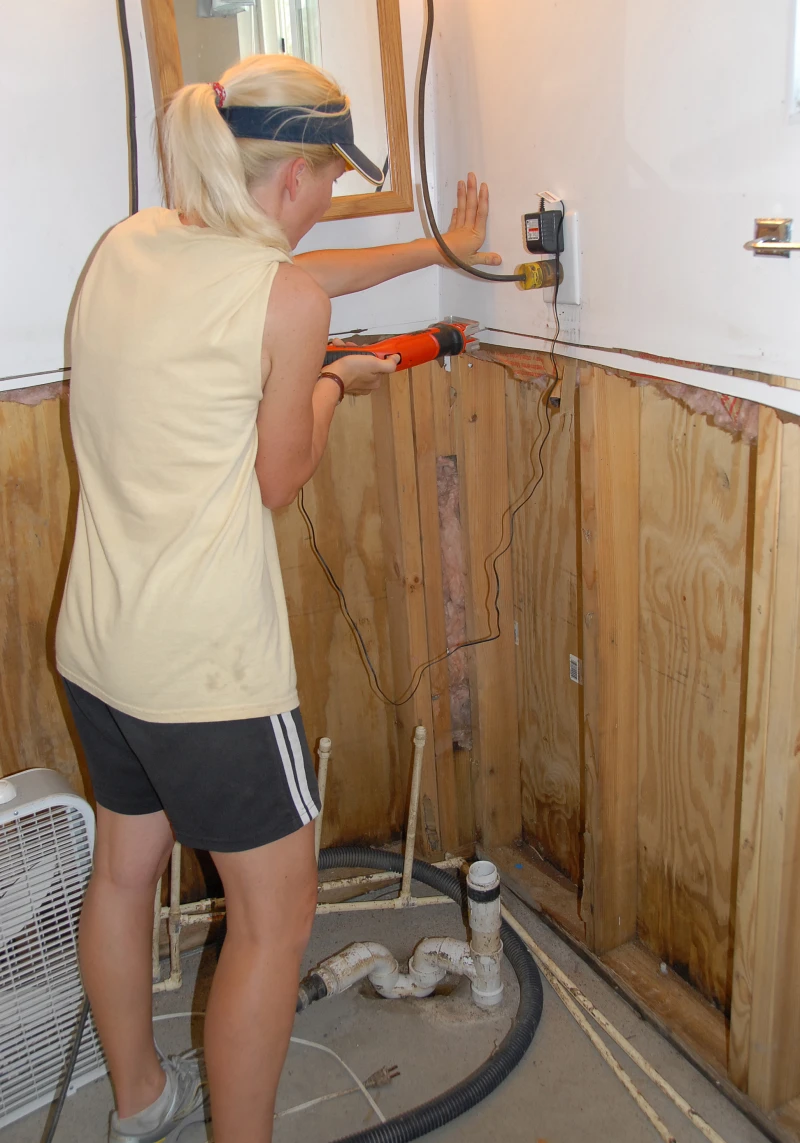
When the wall did not pass, the fix is a flood cut. Our guide on when wet drywall can be saved and when it has to be cut shows how to read a meter on walls and how to make a clean cut. In a home built before 1978, test before you cut, for the lead and asbestos reasons in test four.
Doing It Yourself and Your Insurance Claim
A lot of people think drying it themselves will hurt the claim. Usually the opposite is true. Insurers expect you to stop the damage from getting worse.
The California Department of Insurance claims guide, revised February 28, 2025, says to make temporary repairs to prevent more damage, and that reasonable costs to protect the home are reimbursed as long as you save receipts. The Texas Department of Insurance home insurance guide, updated June 1, 2026, gives the same advice. Make only temporary repairs, and do not make permanent ones before the insurer sees the damage.
So the rules for a DIY job that keeps a claim healthy are short.
- Dry, do not rebuild. Fans, a dehumidifier, pulling wet pad and baseboards are temporary steps. New drywall and flooring wait for the adjuster.
- Keep every receipt. Fan and dehumidifier rentals, the wet vacuum, trash bags, the meter.
- Keep the wet stuff. The California guide says not to throw out damaged items until the adjuster tells you to. Photograph the pad and drywall you pull, and set it aside if you can.
- Keep your readings. A daily log with dates is proof the room was dried with care.
One more reason not to drag your feet. The Texas guide says most policies cover a sudden and accidental release of water but not a continuous leak, and that mold is generally not covered except to repair damage from a covered risk. A DIY job that stalls for weeks and grows mold can turn a covered loss into a fight. Before you talk to the adjuster, read what not to say to an insurance adjuster after water damage.
This is general information, not insurance or legal advice. Your policy wording controls your claim.
The Middle Path Between DIY and Pro
You do not have to pick all DIY or all pro. For a lot of leaks the smart move is to do the first hours yourself, then pay for readings.
Stop the water, extract it, pull the pad and start the fans. Then have someone with a meter check the walls, the subfloor and the room below. If the readings show only surface moisture, finish it yourself. If they show wet framing or a wet cavity, let the pro dry that part. Good crews work to ANSI/IICRC S500, the industry standard for professional water damage restoration, now in its fifth edition from 2021, so ask whether they follow it and whether you will get a daily drying log.
You do not always need a full crew for that check. A visual inspection with moisture readings often costs about $200 to $600, according to our mold inspection cost guide. That is cheap insurance on a $500 DIY job.
And if the leak happens at 2 in the morning, you are not stuck. Of the 22,459 water damage companies in our listings file, 13,319 list themselves as open 24 hours. If you do hire, our guide to choosing a restoration company lists the questions to ask and the red flags to walk away from.
Notes
Every rule above comes from a page we opened in October 2026. Cost ranges and listing counts are our own, as noted where they appear.
- EPA, A Brief Guide to Mold, Moisture and Your Home
- EPA, Mold Remediation in Schools and Commercial Buildings, Table 1
- EPA, Renovation, Repair and Painting Program for Do It Yourselfers
- EPA, Protect Your Family From Exposures to Asbestos
- Ready.gov, Floods
- California Department of Insurance, Residential Property Claims Guide
- Texas Department of Insurance, Home insurance guide
- IICRC, ANSI/IICRC S500 Standard for Professional Water Damage Restoration
What Readers Write In
Can I do water restoration myself?
Yes, for a small leak of clean water found within a day and kept to hard floors or a small area of carpet. Use a wet vacuum, fans and a dehumidifier, and check it with a moisture meter. Call a pro for sewage or floodwater, water inside walls or ceilings, anything wet past 48 hours, mold over about 10 square feet, or cutting into a home built before 1978.
Can you do water remediation yourself?
On a small clean water loss, yes. Remediation of contaminated water is different. EPA says sewage or other contaminated water calls for a professional with experience in that kind of cleanup, along with protective gear and containment. Do not run fans on dirty water until it is cleaned up.
Can I do water mitigation myself?
Mitigation means stopping the damage from getting worse, and you should start it yourself right away. Stop the water, take photos, extract it, pull wet pad and start drying. Insurers expect those temporary steps. Save every receipt and hold off on permanent repairs until the adjuster sees the damage.
Does insurance pay for water restoration?
Often, when the water came from a sudden and accidental release like a burst pipe. The Texas Department of Insurance says most policies do not cover a continuous leak, flooding or wear and tear, and generally do not cover mold except to repair damage from a covered risk. Flood needs its own policy. Check your own policy wording.
Is water restoration worth it?
On the right job, yes. A professional single room clean water job often runs about $1,000 to $3,000 by our cost guide, while a DIY kit runs $50 to $500. A pro is worth it when water is hidden in walls or floors, because a missed wet cavity can mean mold and rebuild later that costs far more than the drying.
How do I know if my walls are dry after a leak?
Use a pin moisture meter. Take a reading on the same material in a room that never got wet, then read the same marked spots on the wet wall every day. When the wet spots match the dry reference, the wall is dry. If readings stall, water is still getting in or is trapped where you cannot reach it.
Is water restoration a hard job?
For a homeowner, a small clean water job is not hard, just steady work for a few days of extracting, running fans and a dehumidifier, and taking readings. What makes it hard is what you cannot see. Water in wall cavities, subfloors and ceilings needs the right meters and equipment to find and dry.
Find a Company
Compare water damage restoration companies in 506 US metro areas, or use the near me finder. Every listing shows the company’s own phone number, and we never sell your call. On your phone, the water category checker and dehumidifier size helper can walk you through the first steps.
Next Stop
- DIY with careWhat to Do in the First 24 Hours After Water DamageAn hour by hour plan for the first day after water damage. Make it safe, stop the source, document, remove water and start drying before mold can start.
- DIY with careHow to Dry Wet Carpet and Pad, and When to Throw It OutHow to dry wet wall to wall carpet and pad at home, how to check it is really dry, and the clear signs that carpet or pad has to be thrown out instead.
- DIY with careWet Drywall, When You Can Dry It and When You Must Cut ItHow to tell if wet drywall can be dried in place or must be cut out, how to read a moisture meter on walls, and how to make a clean flood cut safely.
- DIY with careWater Damage Restoration Cost in 2025 and 2026Typical 2025 to 2026 water damage restoration costs by job size, water category and equipment, what drives the price up or down, and how insurance fits in.
- DIY with careWater Damage Categories and Classes ExplainedWhat Category 1, 2 and 3 water and Class 1 to 4 water damage mean, how to classify your own leak, and how these labels shape safety, cleanup and cost.
- Call a proHow to Choose a Restoration Company, and the Red Flags to AvoidHow to vet a water, mold or fire restoration company fast, which licenses and certifications matter in Nevada, California and New York, and the red flags.
More Posts
- Insurance claims · October 23, 2026Never Accept a Water Damage Claim Denial Before Checking ThisSeven reasons water claims get denied, the proof that answers each one, state deadlines for insurers and you, and the appeal steps that can turn a no around.
- Insurance claims · October 21, 2026Will My Insurance Go Up If I File a Water Damage Claim?Usually yes. One water claim adds about 25 percent at renewal on average and stays on your record for years. When to file, when to pay, and state rules.
- Insurance claims · October 15, 2026What Not to Say to an Insurance Adjuster After Water DamageDo not guess the cause, timing or cost, and do not call it a flood unless it was. What to say instead, plus Texas, Florida, California and flood rules.
- Water damage · October 13, 2026How to Tell If Water Damage Is PermanentClean water dried within 48 hours usually leaves nothing lasting. Swollen seams, soaked insulation, sewage and mold do. A material by material test.
- Water damage · October 6, 2026What Happens During a Water Damage Restoration JobWhat a restoration crew actually does after a leak or flood, from the first visit to the day the dryers leave, and where you and your insurer fit in.
- Mold · October 6, 2026What a Mold Remediation Plan Should Say, and How Clearance WorksWhat a written mold remediation plan should say, how the work is sized, and how clearance testing shows the job is done. Plain steps for homeowners.
- Fire and smoke · October 6, 2026After a House Fire, What Happens to Your BelongingsHow contents cleaning and pack-out work after a house fire, what can usually be saved, what should go, and how to keep your insurance claim clean.
- Asbestos · October 6, 2026Asbestos Testing Before a Remodel, From First Question to Lab ReportHow asbestos testing works before you remodel an older home, who should take samples, what the lab report means, and what to do if you disturbed it.
- Storm and fire · October 6, 2026Board-Up Service After a Fire or Storm, What It Is and How to Hire OneWhat board-up and emergency securing services do after a fire, break-in or storm, how to avoid scams, and how to protect your insurance claim.