Water damage
How to Tell If Water Damage Is Permanent
Most water damage is not permanent if the water was clean and the material was dried within 24 to 48 hours. It is permanent when drywall is soft or swollen at the seams, when particleboard or laminate has puffed up, when insulation or ceiling tile got soaked, when sewage or floodwater touched anything porous, or when mold has started. Three things decide it. What the water was, how long it sat, and what it soaked.
Published October 13, 2026 by the Remediational editors. General information, not professional, legal or insurance advice.
Sections
8 sections
Permanent Means It Will Not Come Back When It Dries
We list thousands of water damage companies, and the question we hear behind almost every search is the same. Is this ruined, or will it dry out? Many answers hand you a list of signs. Stains, a musty smell, peeling paint. Those tell you that water got in. They do not tell you whether the thing it got into will recover.
A better way to think about it follows. Damage is permanent when drying alone will not put the material back the way it was. Wet drywall that stays firm and flat dries out and is fine. Wet drywall with swollen seams does not shrink back. A wet subfloor that dries fast is fine. A subfloor that stayed wet for weeks can start to rot.
Three questions decide almost every case.
- What was the water? Clean water from a supply line is one job. Sewage, a drain backup or outdoor floodwater is a different job, and porous things it touched do not stay.
- How long did it sit? The EPA’s mold guidance is built around drying wet materials within 24 to 48 hours. Past that, assume mold is possible even if you cannot see it.
- What did it soak? Concrete, tile and solid wood forgive a lot. Insulation, ceiling tile, pad and particleboard forgive almost nothing.
Answer those three and most of the guessing goes away. The rest of this post walks through each one with the numbers behind it.
Material by Material, What Recovers and What Does Not
This table pulls together the EPA’s clean water cleanup table, the Gypsum Association’s guidance on wet wallboard and the wood moisture limits published by Home Innovation Research Labs. It assumes clean water. If the water was dirty, skip to the section on contaminated water below.
| Material | Usually recovers if | Permanent when |
|---|---|---|
| Drywall | It stays firm, there is no obvious swelling and the seams are intact. The EPA says that board can be dried in place. | It is soft, sagging or swollen at the seams, it got sewage or floodwater, or mold has grown on the paper. |
| Carpet | Water is extracted and the carpet is dry within 24 to 48 hours. | It stayed wet past that window, smells sour, or touched dirty water. The pad under it is often cheaper to replace than to dry. |
| Ceiling tiles | Rarely. The EPA table says discard and replace. | Almost always, once soaked. |
| Fiberglass and cellulose insulation | Rarely. The EPA table says discard and replace both. | Once soaked. Wet insulation also keeps the wall cavity wet. |
| Solid wood and framing | It is dried fast with dehumidifiers, fans and gentle heat. Lumber counts as dry below about 19 percent moisture. | It has rot, or it sat wet long enough to buckle, split or grow mold. |
| Laminate and particleboard cabinets | Only a light splash wiped up fast. | The edges or the core have swelled. That swelling does not go back down. |
| Concrete and block | Water is extracted and the surface is dried with dehumidifiers, fans or heat. | Rarely. The concern is what sits on top of it. |
| Tile, vinyl and linoleum | The surface is wiped and dried, and the floor underneath is also dry. | Water got under it and the underlayment stayed wet. |
| Upholstered furniture | Water is extracted and it dries fast. The EPA warns that is hard to do within 48 hours. | It stayed damp, smells musty or got dirty water. |
| Books and papers | Valuable ones are frozen or freeze dried quickly. | Ordinary paper that sat wet. The EPA says to discard it. |
Notice how often the answer is about time and not about how bad it looks on day one. A soaked carpet dried in a day is usually fine. A slightly damp one left for a week often is not.
Our guides go deeper on the three you will ask about most. Read when wet drywall can be dried and when it must be cut, saving wet hardwood, laminate and vinyl plank floors, and how to dry wet carpet and pad.
The 48 Hour Clock
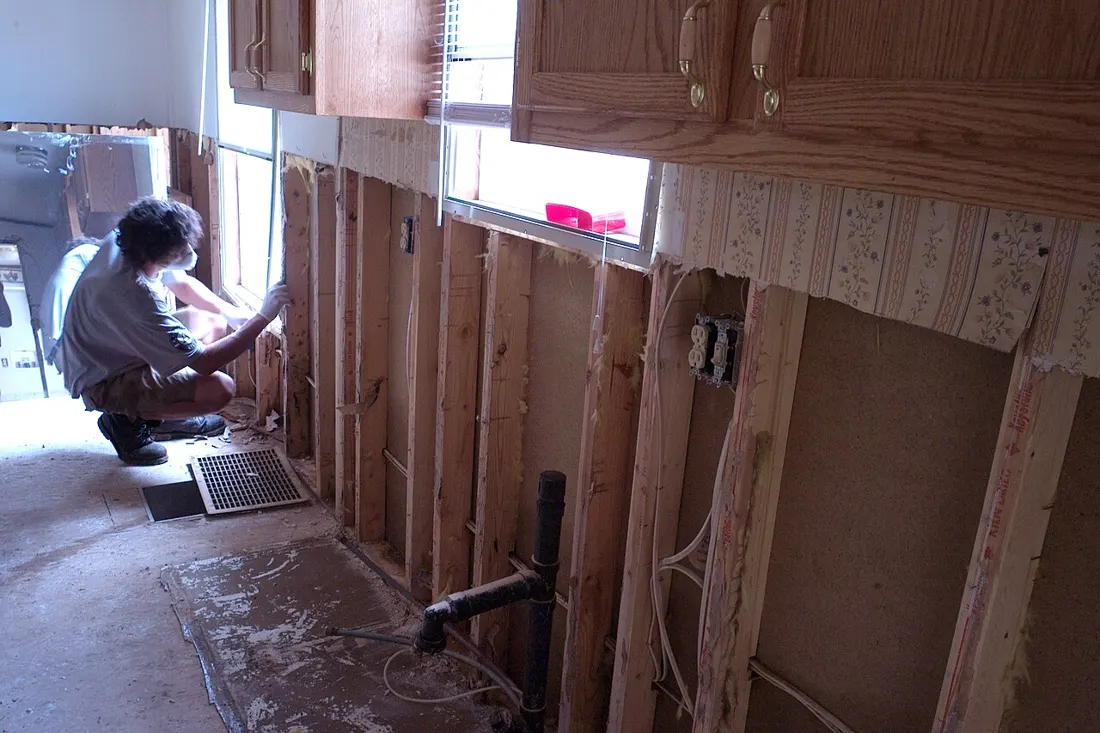
The single most useful number in this whole topic is 48 hours. The EPA’s guide to mold remediation in schools and commercial buildings opens its water damage table with strategies for responding within 24 to 48 hours, before mold has a chance to grow. Its next line is the important one. If mold has already grown, or materials have been wet for more than 48 hours, it sends you to a different table, the one for mold cleanup.
FEMA says much the same thing in plainer words. Its mold fact sheet for flooded homes says items that cannot be cleaned and dried out completely within 24 to 48 hours should be bagged, sealed and taken outside. It also warns that you can have mold damage with no other visible damage at all.
Two things to take from that.
- The clock starts when the water arrived, not when you found it. A supply line that leaked all weekend while you were away has already used its window.
- Forty eight hours is a guideline, not a promise. The EPA notes that mold can still grow on things dried within 48 hours. A warm, closed house dries slower than a cool, breezy one.
If you are inside the window right now, stop reading after this paragraph and go dry things. Pull standing water, get air moving, run a dehumidifier and lift wet rugs. Our first 24 hours after water damage guide has the order to do it in.
Six Checks You Can Do Today
You do not need a contractor to get a first answer. These checks cost little or nothing.
- The thumb test. Press the wall or ceiling near the wet spot and again a few feet away. Firm in both places is a good sign. Soft, crumbly or spongy means the gypsum or wood has lost strength.
- Look at the seams and edges. Swollen drywall tape, puffed up laminate edges or a cabinet bottom that bulges are the clearest signs of permanent damage. Those materials do not shrink back.
- Check the ceiling from below, never by standing under a sag. A sagging ceiling panel can be holding water. Keep people and pets out from under it and turn off power to fixtures in it.
- Smell it the next day. A sour or musty smell in a closed room after the first day points to growth starting in something you cannot see, often the pad, the insulation or the back of the drywall.
- Mark the stain. Trace the edge of a ceiling or wall stain lightly with a pencil and date it. If it keeps spreading, water is still coming in and nothing will dry until you find it. Our guide on finding a hidden leak shows how.
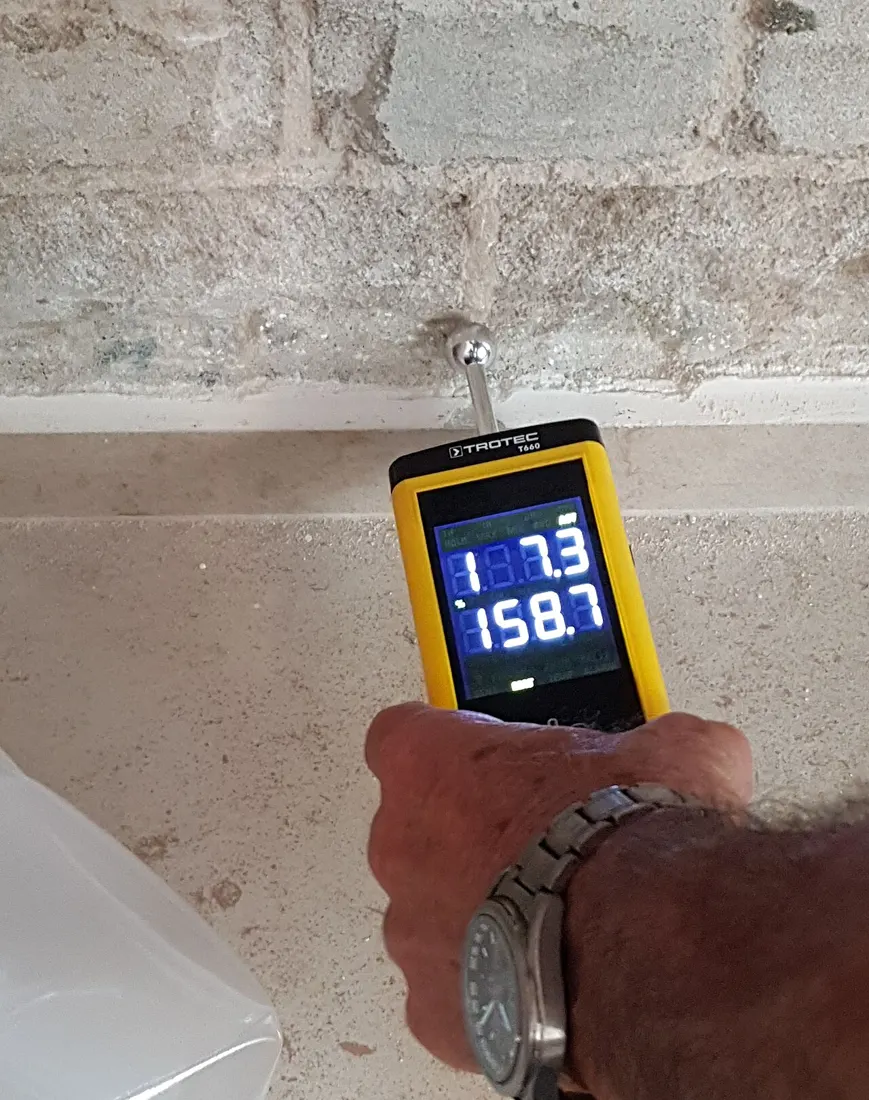
- Use a moisture meter for the trend, not the verdict. A low cost pin meter shows which spots are wetter than a dry wall in another room. Take readings at the same marks every day. Falling numbers mean drying is working. Flat numbers mean it is not.
One caution on that last check. The Gypsum Association’s guidance says meters can show which areas of drywall are wet and which are dry, but that ranking alone is not a reliable basis for deciding whether to replace the board. Use the meter to watch drying. Use the thumb test, the seams and the clock to decide.
Wood Has Real Numbers
Wood is the one material where you can put a number on permanent, and it is where most of the scary stories come from. Floor joists, subfloors and wall framing do not rot from one clean spill dried quickly. Rot needs wood held wet for a long time.
Home Innovation Research Labs, a building research lab tied to the National Association of Home Builders, lays out the limits. Solid lumber counts as dry below 19 percent moisture content, and engineered sheathing like plywood and OSB below 16 percent. A 20 percent limit keeps decay from spreading. In fresh wood that is not already infected, decay can only get started once the moisture rises above the fiber saturation point, about 26 to 29 percent for most lumber, at temperatures between 50 and 95 degrees Fahrenheit. In its field work, wood held at 35 percent moisture eventually decayed or grew fungus.
| Wood moisture reading | What it means |
|---|---|
| Under 16 to 19 percent | Dry. Plywood and OSB under 16, solid lumber under 19. |
| About 20 percent | The line for decay. Keep framing below it. |
| About 26 to 29 percent and up | Fiber saturation. Decay can start in clean wood if it stays here. |
| Sustained 35 percent | Decay or fungal growth over time in field tests. |
Where Wet Wood Turns Permanent
Wood moisture content in percent, 0 to 40
- Under 16 Plywood and OSB count as dry
- Under 19 Solid lumber counts as dry
- About 20 The line that keeps decay from spreading
- 26 to 29 Fiber saturation, decay can start in clean wood
- 35, held Wood kept this wet decayed in field tests
So a subfloor that reads in the high 20s the day after a leak is not ruined. It is a subfloor that needs to come down below 20 and stay there. A subfloor that is soft, dark and crumbly when you probe it with a screwdriver has already crossed the line.
Hardwood floors add one more rule. Do not sand a cupped floor until it has fully dried. Boards that cup when wet often flatten as they dry. Sand them flat while they are still wet and they can crown the other way once the moisture leaves, which turns a recoverable floor into a permanent problem.
Does Water Damage Go Away on Its Own?
The water goes away. Some of the damage does not. That is the plain answer to one of the most common questions on this topic.
- Wetness goes away if something can dry it. Air, heat and a dehumidifier will pull water out of solid wood, concrete and firm drywall.
- Swelling in pressed wood products stays. Particleboard, MDF and laminate cores puff up when wet and do not return to shape.
- Stains stay. A dry, hard ceiling stain that is not spreading is usually cosmetic. It needs a stain blocking primer and paint, not a new ceiling. A stain that is damp, soft or growing is still active.
- Mold does not go away when the surface dries. It goes dormant and comes back the next time it gets damp.
- Hidden wetness lingers. Water trapped behind vinyl wallpaper, under vinyl plank or inside an insulated wall can stay wet for weeks because nothing can reach it.
That last point is why a wall can look fine for a month and then show bubbling paint or a smell. The damage was not new. It was slow. If you had a leak inside a wall or under a floor and never opened anything up, a meter reading there a week later is worth the few minutes it takes.
When the Water Was Dirty, Porous Things Do Not Stay
Everything above assumes clean water. Change the water and the answer changes.
The Gypsum Association’s guidance says gypsum board exposed to sewage or floodwater must be replaced, with no drying exception. The EPA’s water damage table only covers clean water. For water that may hold sewage or other contaminants, it says OSHA requires protective gear and containment, and it says not to run fans until the water is known to be clean, because fans spread what is in it.
That means for a toilet overflow with waste, a drain backup or outdoor floodwater, treat soaked carpet, pad, drywall, insulation, upholstered furniture and particleboard as gone. Hard surfaces like tile, metal, glass and sealed concrete can be cleaned and disinfected. Our guide to water damage categories and classes explains how to tell clean, gray and black water apart, and sewage backup cleanup covers what you can safely do yourself.
Clean water can turn into dirty water, too. A leak that sat for days in a warm house, or that now smells sour, should be handled as gray water even if it started at a supply line.
Before You Throw Anything Out
Deciding something is permanent is also an insurance moment. FEMA’s mold fact sheet says to take photos of discarded items for your claim. Do it before anything leaves the house.
- Photograph each item and the room it came from, with a wide shot and a close shot.
- Cut a small sample of carpet and pad and keep it in a bag with the date.
- Keep the moisture readings you took, with dates and spots.
- Get the plumber’s note on the cause in writing.
Permanent damage from a sudden leak and permanent damage from a slow one can land in different places on a homeowners policy, so the records matter. Our guides on documenting damage for a claim and whether insurance covers water damage walk through it.
Call a restoration company when water got inside walls or under floors you cannot open, when it was sewage or floodwater, when more than one room is wet, or when the 48 hour window has already passed. Ask them to show you the moisture readings, not just the verdict.
Notes
Every rule and number above comes from a page we opened in October 2026.
- EPA, Mold Remediation in Schools and Commercial Buildings, Chapter 4, Table 1 Water Damage Cleanup and Mold Prevention
- EPA, A Brief Guide to Mold, Moisture and Your Home
- FEMA, Prevent Mold From Becoming a Secondary Disaster, updated January 21, 2025
- Walls and Ceilings, Gypsum Association recommendations for assessing water damaged gypsum board (GA-231)
- Home Innovation Research Labs, How Wet Is Too Wet
What Readers Write In
How to tell if water damage is permanent?
Ask three questions. Was the water clean, was the material dried within 24 to 48 hours, and what did it soak? Clean water dried fast usually leaves no lasting damage. Soft or swollen drywall, puffed up laminate or particleboard, soaked insulation or ceiling tile, mold, or anything porous touched by sewage or floodwater is permanent and needs to be replaced.
Does water damage eventually go away?
The water goes away if something dries it, but some damage stays. Swelling in particleboard and laminate does not shrink back, stains stay until you prime and paint, and mold goes dormant rather than dying. Water trapped inside walls or under vinyl can stay wet for weeks, so check with a moisture meter.
How long does water damage take to show?
Surface water shows right away. Damage inside a wall or under a floor can take days or weeks to show as bubbling paint, a stain, a smell or cupping boards. That is why a moisture reading a week after a leak is worth taking even if the wall looks fine.
What is considered minor water damage?
Clean water in a small area, caught and dried within a day or two, on materials that stayed firm and flat. A spill on tile, a damp spot on firm drywall or a small wet patch of carpet that dried quickly usually counts. Water inside walls, under floors, in more than one room, or from sewage is not minor.
How long does it take for a floor to rot from water damage?
Rot does not happen from one clean spill dried quickly. Building research puts the decay line at about 20 percent wood moisture, and decay in clean wood can only start once the wood stays above about 26 to 29 percent. Wood held at 35 percent moisture eventually decayed in field tests. Dry the subfloor below 20 percent and keep it there.
Can drywall recover from water damage?
Yes, if the water was clean, the board stayed firm with no swelling and intact seams, and you dried it within about 24 to 48 hours. Drywall that is soft, sagging, swollen at the seams, moldy, or wet from sewage or floodwater has to be cut out and replaced.
Find a Company
Compare water damage restoration companies in 506 US metro areas, or use the near me finder. Every listing shows the company’s own phone number, and we never sell your call. On your phone, the first hour checklist can walk you through the first steps.
Next Stop
- DIY with careWet Drywall, When You Can Dry It and When You Must Cut ItHow to tell if wet drywall can be dried in place or must be cut out, how to read a moisture meter on walls, and how to make a clean flood cut safely.
- DIY with careSaving Wet Hardwood, Engineered, Laminate and Vinyl Plank FloorsHow to dry wet solid hardwood, engineered wood, laminate and vinyl plank floors, what cupping means, and when to wait, refinish or replace the floor.
- DIY with careHow to Dry Wet Carpet and Pad, and When to Throw It OutHow to dry wet wall to wall carpet and pad at home, how to check it is really dry, and the clear signs that carpet or pad has to be thrown out instead.
- DIY with careWater Damage Categories and Classes ExplainedWhat Category 1, 2 and 3 water and Class 1 to 4 water damage mean, how to classify your own leak, and how these labels shape safety, cleanup and cost.
- DIY with careHow to Find a Hidden Leak in Walls, Ceilings and SlabsHow to track down a hidden leak in walls, ceilings or under a slab using your water meter, a dye test, a moisture meter and simple isolation tests.
- DIY with careHow Fast Does Mold Grow After a LeakMold can start growing 24 to 48 hours after a leak. See what speeds it up, how fast drywall, carpet pad, wood and concrete go, and what to do in each window.
More Posts
- Insurance claims · October 23, 2026Never Accept a Water Damage Claim Denial Before Checking ThisSeven reasons water claims get denied, the proof that answers each one, state deadlines for insurers and you, and the appeal steps that can turn a no around.
- Insurance claims · October 21, 2026Will My Insurance Go Up If I File a Water Damage Claim?Usually yes. One water claim adds about 25 percent at renewal on average and stays on your record for years. When to file, when to pay, and state rules.
- DIY or hire · October 19, 2026Can I Do Water Restoration Myself?Yes for a small clean water leak caught fast. No for sewage, floodwater, old walls or mold. Five tests, the gear and its cost, and how to prove it is dry.
- Insurance claims · October 15, 2026What Not to Say to an Insurance Adjuster After Water DamageDo not guess the cause, timing or cost, and do not call it a flood unless it was. What to say instead, plus Texas, Florida, California and flood rules.
- Water damage · October 6, 2026What Happens During a Water Damage Restoration JobWhat a restoration crew actually does after a leak or flood, from the first visit to the day the dryers leave, and where you and your insurer fit in.
- Mold · October 6, 2026What a Mold Remediation Plan Should Say, and How Clearance WorksWhat a written mold remediation plan should say, how the work is sized, and how clearance testing shows the job is done. Plain steps for homeowners.
- Fire and smoke · October 6, 2026After a House Fire, What Happens to Your BelongingsHow contents cleaning and pack-out work after a house fire, what can usually be saved, what should go, and how to keep your insurance claim clean.
- Asbestos · October 6, 2026Asbestos Testing Before a Remodel, From First Question to Lab ReportHow asbestos testing works before you remodel an older home, who should take samples, what the lab report means, and what to do if you disturbed it.
- Storm and fire · October 6, 2026Board-Up Service After a Fire or Storm, What It Is and How to Hire OneWhat board-up and emergency securing services do after a fire, break-in or storm, how to avoid scams, and how to protect your insurance claim.