Insurance claims
What Not to Say to an Insurance Adjuster After Water Damage
Do not guess. The things that hurt a water damage claim are guesses said out loud, like how long a leak ran, what caused it, what it will cost, or calling it a flood when it was a pipe. Tell the adjuster what you saw, when you found it and what you did, say “I don’t know” when you don’t, and put every promise in writing. Never misstate a fact.
Published October 15, 2026 by the Remediational editors. General information, not professional, legal or insurance advice.
Sections
8 sections
Why the Words Matter on a Water Claim
We list thousands of water damage companies, and this post is for the moment right after you call one. The water is stopped, the floor is soaked, and you are about to talk to an adjuster for the first time. Most of the damage to a claim at that point is not done by lying. It is done by guessing out loud.
A guess costs so much for a simple reason. A homeowners policy splits water by where it came from and how it happened. The Texas Department of Insurance home insurance guide, updated June 1, 2026, says most policies cover a sudden and accidental release of water and do not cover a continuous water leak, flooding or wear and tear. The same guide lists sewer and drain backup as a common add-on you buy separately. So two words, sudden or ongoing, can decide which column your loss lands in.
Flood is its own policy. FloodSmart, the federal flood insurance site, defines a flood as water covering two or more acres or two or more properties of normally dry land. FEMA’s agent guidance on flood causes says rain coming in through a damaged roof is storm damage, not a flood, and that burst pipes and roof leaks are not flood losses. They may fall under a homeowners policy instead.
That is the whole game. The adjuster is trying to put your loss in the right box. Your job is to give true facts about what you saw, and to say so when you do not know something yet. You are not trying to steer the box. You are trying to keep a guess from steering it for you.
Seven Things Not to Say, and What to Say Instead
None of this is about hiding anything. Each line below swaps a guess or a vague word for a plain fact you can stand behind.
| Do not say | Why it hurts | Say this instead |
|---|---|---|
| “It was probably leaking for months.” | A guess about a long leak can read as a continuous leak, which many policies exclude. | “I found the water on Tuesday morning. I do not know when it started. A plumber is coming to find the cause.” |
| “The basement flooded.” | Flood has a set meaning in insurance. It may send your claim toward a policy you do not have. | “There is water in the basement. I can see it coming from the floor drain.” Or simply, “I have water damage and I am not sure of the source yet.” |
| “It is not that bad.” | Water travels into walls, pads and subfloors you cannot see on day one. | “This is what I can see so far. A restoration company is taking moisture readings.” |
| “I think it was the water heater, or maybe the pipe.” | Two guesses can become two stories in the file. | “I do not know the cause. I will send you the plumber’s written report.” |
| “I’ll just fix it myself this weekend.” | Permanent repairs before the inspection can make the damage hard to prove. | “I stopped the water and started drying. When can you inspect before I repair?” |
| “Sure, that sounds fine,” to the first offer | An offer framed as full settlement may come with a release. | “Please send the estimate in writing, line by line. I will review it and get back to you.” |
| A dollar figure off the top of your head | A number you said early gets anchored before anyone has priced the work. | “I am still building the list. I will send receipts and the contractor’s estimate.” |
Notice the pattern. Every good answer is a fact you saw, a step you took, or a promise to send proof. Every bad one is a guess, a label, or a number nobody has checked yet.
Telling the Truth Is Not the Same as Sounding Sure
Some of the pages ranking for this question tell you to drop phrases like “I think” and talk with confidence. We disagree, at least the way it is usually put. If you truly do not know how long a pipe dripped, then “I don’t know” is the accurate answer. Sounding sure about something you never saw is how a guess turns into a false statement in your own claim file.
And false statements are a real problem, not a technicality. The Texas Department of Insurance lists filing a false or padded claim as a criminal act you can report to its fraud unit, and its home insurance guide says a company can cancel your policy if you file a fraudulent claim. Florida’s claims law, section 627.70131 of the Florida Statutes, lets an insurer void a policy when someone, with intent to injure, defraud or deceive, gives false, incomplete or misleading facts through the photos or video used in a claim.
So the rule is short. Never misstate a fact. Never guess and present it as a fact. If the adjuster asks something you know, answer it truthfully, even if you think it hurts you. If you do not know, say so and offer to find out. Then follow up in writing.
This post is general information, not legal or insurance advice. Your policy wording and your state’s law control your claim.
What to Say on the First Call
The first call is short. Have your policy number ready and stick to these points.
- What you saw. Where the water is, which rooms, and roughly how much.
- When you found it. The date and time you found it, not when you think it began.
- What you did. Shut off the water, turned off power to wet areas if it was safe, took photos and video, called a restoration company.
- What you know about the source. Only what you saw yourself. “Water was spraying from the supply line under the sink” is a fact. “The pipes in this house are old” is a guess.
- Your questions. Who is your adjuster, how to reach them, when they will inspect, and what emergency drying the policy covers.
Do not wait on the adjuster to start drying. The California Department of Insurance Residential Property Claims Guide, revised February 28, 2025, says to make temporary repairs to stop more damage and to hold off on permanent repairs until the adjuster has seen the home. Our guide on the first 24 hours after water damage covers that first day step by step.
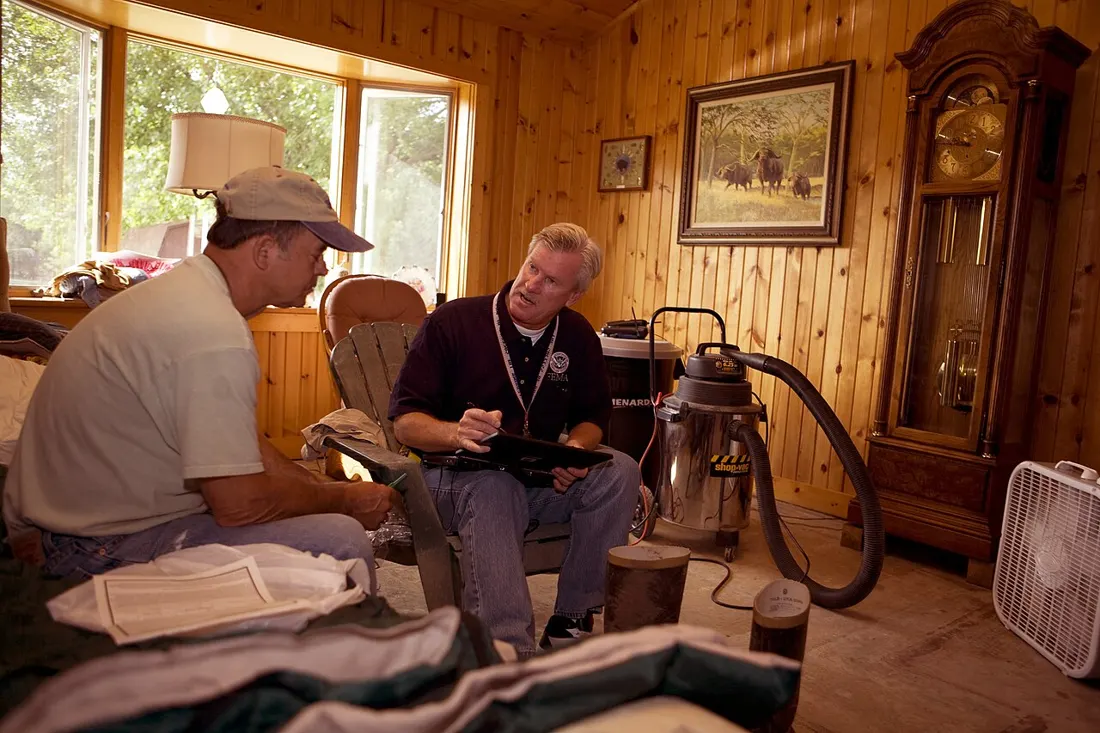
The Recorded Statement
On bigger water claims, the insurer may ask to record a phone interview about what happened. Most policies require you to cooperate with the company’s investigation, so read the duties section of your own policy before you decide anything.
A few habits keep a recorded statement accurate.
- Ask to schedule it for a time when you have your notes, photos and dates in front of you.
- Ask what it will cover so you can pull the right papers.
- Answer only the question asked. Short, true answers. Do not fill a silence with theories about the cause.
- Say “I don’t know” or “I’m not sure” when that is the truth, and offer to send the document that answers it.
- Correct yourself right away if you misspeak. Then confirm the correction by email.
- Ask whether you can get a copy of the recording or transcript.
If the claim is large, or the company is already hinting at a denial, this is a good point to talk to a licensed public adjuster or an attorney before the interview.
State Rules That Set the Clock
Your insurer has deadlines too. Knowing them keeps you from guessing about delays. Four primary sources set the deadlines, as of October 2026.
| Where | Rule | Source |
|---|---|---|
| Texas | The company has 15 business days to say it got your claim, then 15 business days after it gets what it needs from you to say whether it will pay. It can extend by 45 days if it tells you why. Once it agrees to pay, it pays within five business days. A rejection must be explained in writing. | Texas Department of Insurance, updated April 16, 2025 |
| Florida | The insurer acknowledges a claim within 7 calendar days. An adjuster who inspects must give you their name and state adjuster license number. A physical inspection happens within 30 days of the proof of loss, and the insurer pays or denies within 60 days of notice, with a written reason. | Florida Statutes section 627.70131 (2026) |
| California | Keep a log of every call and letter. Do not throw out damaged items until the adjuster says so. Be wary of early offers presented as full settlements. You can usually reopen the claim if more damage turns up, if you tell the insurer right away. | California Department of Insurance claims guide, revised February 28, 2025 |
| Federal flood policy, any state | The insurer assigns an adjuster to contact you within 48 hours of your report. Ask to see the adjuster’s Flood Control Number card and photo ID. Send your proof within 60 days of the flood or the time your insurer gives. A denial can be appealed to FEMA within 60 days of the letter. | FEMA NFIP Claims Checklist, January 2026 |
The Clock on a Water Claim
Deadlines from the sources in the table above, as of October 2026. Bars in calendar days.
- NFIP adjuster contacts you48 hours
- Florida insurer acknowledges7 days
- Texas insurer acknowledges15 business days
- Florida inspection after proof of loss30 days
- Florida pays or denies60 days
- NFIP proof of loss due60 days
Other states set their own timelines. Your state insurance department’s consumer pages will list them, and the NAIC notes that the time you have to report a claim also varies by state.
Keep a Claim Log and Put It in Writing
The single best protection against a misunderstood phone call is a log. FEMA’s flood claims checklist says to record the date, time, name of the person, the assigned adjuster and what was discussed for every conversation. The California Department of Insurance says the same thing, keep a log of all calls and letters.
After each call, send a short email that repeats what was said. “Thanks for the call today. To confirm, you will inspect on Thursday, and I can keep running the drying equipment until then.” If they heard something different, you find out now, not at the denial.
Feed the log with proof. Photos before cleanup, the plumber’s written note on the cause, the restoration company’s daily moisture readings, and receipts for fans, tarps and hotel nights. Our guide on documenting damage for an insurance claim has the full shot list, and how to read a restoration estimate helps you check the adjuster’s numbers line by line.
Do not sign anything you do not understand, from the insurer or a contractor. A form that hands your insurance benefits to a company is a big step, and our guide on work authorizations and assignment of benefits explains what those papers do.
When to Get Help
Most small water claims settle with a homeowner, an adjuster and good records. Get help when any of these is true.
- The insurer says the leak was continuous or gradual and you have proof it was sudden.
- The company calls it a flood and you do not believe it meets the flood definition.
- The offer leaves out rooms, drying days or contents, and your written request did not fix it.
- You are asked to sign a release before you have seen a line by line estimate.
Ask for any denial in writing, as the NAIC advises. Read the policy section it cites. Then call your state insurance department. In California that is 800-927-4357, and in Texas it is 800-252-3439. A licensed public adjuster works for you and charges a share of the payment. An attorney can tell you what your state’s law allows. Our guide on whether homeowners insurance covers water damage walks through denials and appraisal.
Notes
Every rule above comes from a page we opened in October 2026.
- Texas Department of Insurance, Home insurance guide
- Texas Department of Insurance, Steps to getting your home or car insurance claim paid
- Texas Department of Insurance, Fraud
- Florida Statutes section 627.70131
- California Department of Insurance, Residential Property Claims Guide
- FloodSmart, What is a flood
- FloodSmart, The cause of flooding matters for NFIP coverage
- FEMA NFIP Flood Insurance Claims Checklist, January 2026
- NAIC, What you need to know when filing a homeowners claim
- NAIC, What you should know about settling a homeowners insurance claim
What Readers Write In
What not to say to insurance adjuster water damage?
Do not guess. Skip guesses about how long the leak ran, what caused it, or what it will cost, and do not call it a flood unless water came in from outside across the ground. Say what you saw, when you found it and what you did. If you do not know something, say so and offer to send proof. Never misstate a fact.
Should I say flood or water damage?
Describe what happened rather than picking a label. Flood has a set meaning in insurance, water covering two or more acres or two or more properties. If water came from a pipe, appliance or drain inside your home, say that. If you are not sure of the source, say you have water damage and that you are waiting on a plumber.
Can I tell the adjuster I don’t know?
Yes. If you do not know the answer, saying so is the accurate answer. Offer to find out and send the document that answers it, such as a plumber’s report or moisture readings. Guessing and presenting it as fact is what causes trouble.
Do I have to give a recorded statement?
Most policies require you to cooperate with the insurer’s investigation, so read the duties section of your policy. You can ask to schedule the call for a time when you have your notes ready and ask what it will cover. On a large or disputed claim, talk to a public adjuster or attorney first.
What’s the biggest mistake people often make when dealing with an insurance claim?
Throwing out damaged items or doing permanent repairs before the adjuster sees them, and not keeping a log. Take photos first, make only temporary repairs, keep damaged items until the adjuster says you can discard them, and write down every call with the date, name and what was said.
How to maximize insurance claims for water damage?
There is no trick. Report it fast, stop the damage, and document everything with photos, moisture readings and receipts. Ask for the estimate line by line and compare it to your contractor’s. Send a written request with proof for anything left out. That gets you what the policy owes, which is the goal.
How long does an insurer have to respond to a water damage claim?
It depends on the state. In Texas the company has 15 business days to acknowledge the claim and 15 business days after getting what it needs to accept or reject it. In Florida an insurer must pay or deny within 60 days of notice. Check your state insurance department for your rules.
Find a Company
Compare water damage restoration companies in 506 US metro areas, or use the near me finder. Every listing shows the company’s own phone number, and we never sell your call. On your phone, the first hour checklist can walk you through the first steps.
Next Stop
- DIY friendlyHow to Document Damage for an Insurance ClaimA step by step way to photograph damage, list ruined belongings, keep receipts and a claim log, so your insurance claim is paid on facts instead of memory.
- DIY with careDoes Homeowners Insurance Cover Water DamageWhat homeowners insurance usually covers for water damage, what it usually excludes, why flood is separate, and how to read your own policy before you file.
- DIY with careHow to Read a Restoration Estimate Line by LineWhat each line on a water, mold or fire restoration estimate means, from extraction and equipment days to containment and contents, and what to question.
- DIY with careWork Authorizations and Assignment of Benefits, What You Are SigningWhat a restoration work authorization, direction to pay and assignment of benefits really do, the clauses to check before signing, and how to stay protected.
- DIY with careWhat to Do in the First 24 Hours After Water DamageAn hour by hour plan for the first day after water damage. Make it safe, stop the source, document, remove water and start drying before mold can start.
- DIY with careWater Damage Categories and Classes ExplainedWhat Category 1, 2 and 3 water and Class 1 to 4 water damage mean, how to classify your own leak, and how these labels shape safety, cleanup and cost.
More Posts
- Insurance claims · October 23, 2026Never Accept a Water Damage Claim Denial Before Checking ThisSeven reasons water claims get denied, the proof that answers each one, state deadlines for insurers and you, and the appeal steps that can turn a no around.
- Insurance claims · October 21, 2026Will My Insurance Go Up If I File a Water Damage Claim?Usually yes. One water claim adds about 25 percent at renewal on average and stays on your record for years. When to file, when to pay, and state rules.
- DIY or hire · October 19, 2026Can I Do Water Restoration Myself?Yes for a small clean water leak caught fast. No for sewage, floodwater, old walls or mold. Five tests, the gear and its cost, and how to prove it is dry.
- Water damage · October 13, 2026How to Tell If Water Damage Is PermanentClean water dried within 48 hours usually leaves nothing lasting. Swollen seams, soaked insulation, sewage and mold do. A material by material test.
- Water damage · October 6, 2026What Happens During a Water Damage Restoration JobWhat a restoration crew actually does after a leak or flood, from the first visit to the day the dryers leave, and where you and your insurer fit in.
- Mold · October 6, 2026What a Mold Remediation Plan Should Say, and How Clearance WorksWhat a written mold remediation plan should say, how the work is sized, and how clearance testing shows the job is done. Plain steps for homeowners.
- Fire and smoke · October 6, 2026After a House Fire, What Happens to Your BelongingsHow contents cleaning and pack-out work after a house fire, what can usually be saved, what should go, and how to keep your insurance claim clean.
- Asbestos · October 6, 2026Asbestos Testing Before a Remodel, From First Question to Lab ReportHow asbestos testing works before you remodel an older home, who should take samples, what the lab report means, and what to do if you disturbed it.
- Storm and fire · October 6, 2026Board-Up Service After a Fire or Storm, What It Is and How to Hire OneWhat board-up and emergency securing services do after a fire, break-in or storm, how to avoid scams, and how to protect your insurance claim.